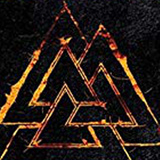
Most “Viking symbol” guides list a dozen designs and assign each a tidy meaning. The problem is that several of the most popular ones were created centuries after the Viking Age ended, and a few are younger than the motor car. This guide gives each symbol a date and a source. Where the evidence is good, we say so. Where a meaning is a modern invention, we say that too — which matters if you are about to put one on your skin.
First: the runes were an alphabet, not a magic system
Runes were writing. Scandinavians used them for names, ownership marks, memorials, trade notes, prayers and graffiti. Around 6,000 runestones survive, the majority in Sweden. Most say something close to “X raised this stone in memory of Y, his father” — they are gravestones and property records, not spell books.
There was a magical dimension; some inscriptions are clearly charms, and the word rún carries a sense of “secret”. But the one-rune-one-meaning divination system sold today was assembled in the twentieth century, largely from the 1980s onward, by analogy with tarot. It is not a Viking practice.
Elder Futhark vs Younger Futhark — the mistake almost everyone makes
These are two different alphabets from two different eras, and picking the wrong one is the most common error in Norse tattoos and jewellery.
- Elder Futhark — 24 runes, used roughly 150–800 AD, across the Germanic world. This is the alphabet with the familiar rune names (fehu, uruz, thurisaz, ansuz…). It was already obsolete before the Viking Age began.
- Younger Futhark — 16 runes, used roughly 800–1100 AD. This is the actual Viking alphabet. It comes in two main variants: long-branch (Danish) and short-twig (Swedish-Norwegian).
Note the direction of travel: the alphabet got smaller as the language got more complex, so a single Younger Futhark rune often has to cover several sounds. Reading Viking Age inscriptions is genuinely ambiguous work.
The practical consequence: if you want your name “in Viking runes” and someone hands you Elder Futhark, you have been given a script that no Viking ever used. Both are legitimate historical alphabets — they just belong to different centuries.
Bind runes
Combining two or more runes into a single glyph is genuinely attested in the historical record, on runestones and portable objects. What is modern is the elaborate bind-rune design practice sold as a personal sigil system. The technique is real; the system around it is new.
Symbols with solid Viking Age evidence
Mjölnir, Thor’s hammer
Verdict: genuine, exceptionally well attested.
Over a thousand hammer pendants have been excavated across Scandinavia, England, Iceland, Russia and beyond. This is the single best-evidenced Norse religious symbol we have.
The most interesting detail is in the timing. Hammer amulet production surged during the tenth century — precisely as Christianity was spreading. They appear to have functioned partly as a deliberate counter-symbol to the cross. One Danish mould was even cut to cast crosses and hammers side by side, which tells you something honest about how conversion actually worked on the ground.
The Valknut
Verdict: genuine Viking Age design, modern name, inferred meaning.
Three interlocking triangles, found on the Stora Hammars stones and the Tängelgårda stone on Gotland, and on the Oseberg ship burial. The archaeological context is consistent: it appears alongside scenes of hanged men, ravens, horses and what look like sacrificial rituals — all Odinic associations.
Two honest caveats. The name “valknut” is modern Norwegian, coined in the nineteenth century; we do not know what the Vikings called it. And the connection to Odin, while well supported by context, is an inference, not a statement from any source.
Huginn and Muninn, and the ravens
Verdict: genuine. Raven imagery runs through Vendel and Viking Age art, and the raven banner is described in several written sources as a war standard carried by Scandinavian armies in England and Ireland. Odin’s two ravens are named in both Eddas.
Gungnir and the spear
Verdict: genuine. Odin’s spear is named in the Eddas, and the practice behind it is historically recorded: a spear thrown over an enemy army dedicated it to Odin. Spear burials and spear deposits in bogs back this up.
Wolves
Verdict: genuine, but distinguish them. Fenrir is the monster bound by the gods. Geri and Freki are Odin’s own wolves. Sköll and Hati chase the sun and moon. These are four different animals doing four different jobs, and popular designs frequently merge them into one generic “Viking wolf”.
The Triquetra
Verdict: period-correct, but not specifically Norse-pagan. The three-cornered knot appears widely in Insular and Germanic art, including on Viking Age objects — and also throughout Christian manuscript decoration of the same period, where it carries Trinitarian meaning. It was a shared decorative vocabulary across early medieval northern Europe, not a Norse religious emblem.
Symbols that are NOT from the Viking Age
This is the section that makes this guide worth bookmarking. None of the following are forgeries or worthless — several come from real Icelandic magical tradition. They simply are not Viking.
The Vegvísir — the “Viking compass”
Verdict: Icelandic, c. 1860. Roughly 800 years after the Viking Age.
The eight-staved design appears in the Huld Manuscript, compiled in Iceland in 1860 by Geir Vigfússon, with related material in seventeenth-century Icelandic grimoires. The manuscript note says that carrying it means one will not lose one’s way in bad weather, even on unfamiliar routes.
That is a genuine piece of Icelandic folk magic with a real manuscript source. It is just post-medieval, Christian-era Icelandic magic, not Norse paganism. No Viking ever saw it, and it has nothing to do with navigation at sea. Its modern fame owes a great deal to Björk’s tattoo.
Ægishjálmur — the Helm of Awe
Verdict: the word is Viking Age; the eight-armed design is not.
This one needs care, because both halves are partly true. The word ægishjálmr does appear in the Poetic Edda, in Fáfnismál, where the dragon Fáfnir says he wore one and that it made all who saw him afraid. So the concept is genuinely Viking Age.
But the familiar eight-armed stave design comes from the same body of post-medieval Icelandic grimoire material as the Vegvísir — seventeenth century and later. The medieval text never describes what an ægishjálmr looked like; it reads more like an attribute or a helmet than a drawn symbol.
The Web of Wyrd / Skuld’s Net
Verdict: entirely modern. Twentieth century.
The nine-stave grid presented as a Norse symbol of fate has no historical attestation whatsoever — no manuscript, no runestone, no artefact. It appears to have been created within modern heathen and neopagan practice. The underlying concept of wyrd is a real Germanic idea about fate; the diagram is not.
The Troll Cross
Verdict: created in the 1990s.
The bent-iron rune-like protective charm was made by the Swedish artist and smith Kari Erlands, who described it as based on a piece from her own region. It is contemporary Swedish folk art with a documented creator, not an archaeological type.
“Til Valhalla”
Verdict: modern phrasing. Now widespread on military memorials and apparel, where it expresses a sincere and legitimate sentiment. But it is a modern English-Norse hybrid, not a recorded Viking Age expression.
Quick reference table
| Symbol | Earliest solid evidence | Viking Age? |
|---|---|---|
| Mjölnir pendant | 9th–11th c. graves, 1,000+ finds | Yes |
| Valknut | Gotland stones, Oseberg burial | Yes (name is modern) |
| Huginn & Muninn / ravens | Vendel & Viking art, Eddas | Yes |
| Gungnir / spear rite | Eddas, bog deposits | Yes |
| Younger Futhark | c. 800–1100 AD | Yes — the real one |
| Elder Futhark | c. 150–800 AD | No — pre-Viking |
| Triquetra | Insular & Germanic art | Period, not Norse-specific |
| Ægishjálmur design | 17th c. grimoires | No (word is older) |
| Vegvísir | Huld Manuscript, 1860 | No |
| Troll Cross | 1990s, named creator | No |
| Web of Wyrd | No historical source | No |
So should you still get the tattoo?
That is your call, and “it is not Viking” is not the same as “it is meaningless”. The Vegvísir carries nearly two centuries of real Icelandic tradition. “Til Valhalla” means something specific and serious to the people who use it. A Troll Cross is honest contemporary Swedish craft.
What is worth avoiding is paying for historical authenticity you are not getting, or having a shop write your name in an alphabet that was obsolete three hundred years before the Viking Age. If authenticity is the point, choose from the first list. If the meaning is the point, choose what you like — just know which one you are choosing.
For the mythological background behind the Odinic symbols, see our guide to Norse mythology; for the world tree specifically, see Yggdrasil and the Nine Realms.
Norse symbols, printed properly
Wall art and apparel built around the designs that are actually attested.
🇺🇸 Fast US shipping · 🇪🇺 Ships across the EU · 🔒 Secure checkout